Meme Coin Trading, Lessons From a Pro Challenge
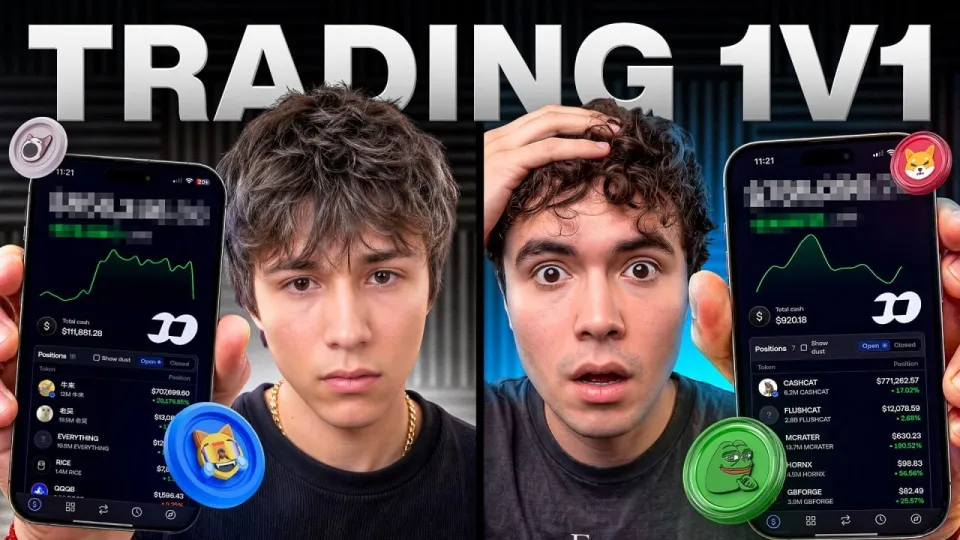
Video: I Challenged A Pro Memecoin Trader (Who Won?)
You can order the same kind of articles for your own video to boost it on YouTube and Google. Just message the Telegram bot @sat_sit_bot. The bot writes and publishes the articles itself (with your YouTube video embedded) on popular topical websites (no ads). Try it free: 50 articles on us.
· based on the channel insentos
Key takeaways
- A meme coin is a high-volatility token driven mostly by community attention, liquidity and narrative rather than cash flow or fundamentals.
- The insentos challenge format pairs an experienced trader with a guest on a live call, using tools like Axiom and the fomo.family terminal.
- Solana memecoins dominate short-term scalping because of low fees and fast block times, but rug pulls and thin liquidity remain the main risks.
- Most beginner losses come from oversized positions, chasing green candles and copying trades without a defined exit plan.
- A repeatable process — fixed risk per trade, pre-set invalidation and profit targets — matters more than picking the next 100x token.
A meme coin is a cryptocurrency whose price is driven mainly by community attention, narrative and liquidity rather than revenue or fundamentals. Trading them profitably is less about finding the next viral ticker and more about position sizing, speed of execution and a written exit plan. The insentos challenge video, where a guest trader works through live meme coin setups on a call, is a useful case study in how that process looks in practice — and where beginners copy it wrong. Registration and the trading terminal used in the video are available through fomo.family.
What a meme coin actually is and why it moves so fast
A meme coin is a token with no product roadmap requirement, launched mostly on Solana or Ethereum, where price discovery happens in minutes rather than quarters. Supply is usually fixed at launch, liquidity sits in a decentralized exchange pool, and the entire valuation is a bet on how many people will care tomorrow.
That structure creates three mechanics traders must understand:
- Liquidity depth. A pool with a few hundred thousand dollars can move 30–50% on a single mid-sized sell. Check pool size before entry, not after.
- Holder concentration. If the top ten wallets hold a large share of supply, a coordinated exit is possible at any moment.
- Narrative half-life. Attention on a meme coin typically decays within hours to days. A trade planned around a week-long hold is usually a trade planned around a different asset class.
On Solana, low fees and sub-second block times make rapid scalping feasible, which is why most live meme coin trading content happens there. The same speed that lets you enter fast lets you get filled at a worse price when a candle spikes.
How the live challenge format works
The insentos video is built around a simple structure: an experienced trader takes a guest through live meme coin trading while explaining decisions out loud, then reviews the session. The description splits the runtime into a long trading-and-advice block, a shorter segment trading with a guest named Grand, and a closing recap.
The format matters because it exposes the parts of meme coin trading that screenshots never show:
- Entry timing. Why a trader waits for a pullback or a volume confirmation instead of buying the first green candle.
- Tooling. Charts, wallet trackers and execution terminals such as Axiom, which is linked in the video description alongside the fomo.family referral.
- Verbalized reasoning. The most-praised comment under the video notes that the guest kept explaining his thought process even mid-trade — that narration is the actual educational value.
A challenge is not a track record. One session shows process; it does not prove edge. Treat the video as a demonstration of method, not a performance record.
A practical checklist before buying any meme coin
Before entering a meme coin, run the same five checks every time — the goal is to make the decision mechanical rather than emotional.
- Contract and mint authority. Confirm the token contract is not mintable and that freeze authority is revoked.
- Liquidity and pool age. Small, brand-new pools are where most rug pulls happen; check how much has been added and whether it is locked.
- Holder distribution. Look at top wallets and whether they are linked to the deployer.
- Volume relative to market cap. Healthy turnover suggests real participation; a high market cap with almost no volume suggests a thin book.
- Your exit before your entry. Decide the invalidation level and the first profit target in advance, then size the position so a full loss is a small, planned percentage of your account.
Scalping Solana memecoins rewards speed, but the checklist is what keeps speed from becoming recklessness. Most traders who blow up skip step five, not step one.
Where beginners lose money on meme coins
The most common failure in meme coin trading is not picking bad tokens — it is position sizing and copying. A trader who sees a profitable live session and immediately mirrors the next call with a large share of their account is taking on risk the original trader never had.
Three patterns repeat:
- Chasing. Buying after a vertical move because the chart looks like it will keep going, then holding through the retrace.
- No invalidation. Averaging down into a token with decaying volume instead of exiting at the planned level.
- Influencer asymmetry. A large account can move a small-cap token with a single post; a retail trader entering after that post is often the exit liquidity. One commenter under the video made exactly this point — that these sessions often end in losses and resemble gambling more than trading.
A useful rule: if you cannot explain in one sentence why someone else will buy your tokens higher within your holding window, you do not have a trade.
Tools and communities around meme coin scalping
Execution speed and information access are the two practical advantages in meme coin trading, and both come from tooling. The video description points to Axiom as the trading terminal and to fomo.family for registration and community access.
What to look for in a setup:
- A terminal with fast routing on Solana so entries and exits are not delayed by interface lag.
- Wallet tracking to see whether early buyers are still holding or distributing.
- A community or group where setups are discussed with reasoning, not just tickers. Several viewers noted that these groups are often hard to actually join — a fair warning to check access conditions before paying for anything.
Tools reduce friction; they do not create edge. A faster terminal with no plan simply loses money more quickly.
Useful links
- fomo.family registration and terminal access
- Axiom trading terminal
- insentos on X
- insentos on Instagram
- insentos on TikTok
Final thoughts on the meme coin challenge
The insentos challenge is most valuable as a look at process: narrated entries, defined exits and a trader who keeps explaining decisions while the position is live. Meme coins remain one of the highest-variance corners of crypto, and a single good session says more about discipline than about any token. Watch it for the reasoning, not for tickers to copy, and paper-trade the checklist above before risking real capital. If you want the same terminal and community setup used in the video, start with fomo.family registration.
Source: I Challenged A Pro Memecoin Trader (Who Won?) · Markdown version
Questions & answers
Is meme coin trading just gambling?
It sits close to gambling when positions are oversized, exits are undefined and trades are copied from someone else. With fixed risk per trade, a written invalidation level and a reason for the next buyer to pay more, it becomes a high-variance speculative strategy rather than a coin flip. The difference is process, not the asset.
Do I need a special terminal like Axiom to trade Solana memecoins?
No, but execution speed and wallet visibility matter a lot on Solana, where moves happen in seconds. A dedicated terminal such as Axiom, linked in the video description, mainly reduces friction and shows on-chain data faster. It does not replace a plan for entries and exits.
How much should a beginner risk on a single meme coin?
A common approach is risking a small fixed percentage of the account per trade, sized so a total loss does not affect the rest of the portfolio. Because meme coins can drop sharply on thin liquidity, position size should be set before entry, not adjusted emotionally after the price moves.
Why do viewers say these challenge videos often end in losses?
Live sessions are unedited and include real drawdowns, which screenshots of winning trades never show. There is also an asymmetry: a large account can move a small-cap token, while a viewer entering after the fact may become exit liquidity. That is why the reasoning matters more than the result of any single session.